

From Earth to Figure
Welcome to From Earth to Figure, an online exhibition of contemporary painting at HICHAA Gallery. Five works by five artists trace a route from mountains, trees and plant life to the forms of human and animal bodies. Each painting can be viewed separately, and you can begin anywhere. The suggested sequence brings one question into focus: what changes in our relationship to nature when we move from looking across a landscape to looking closely at the shape of a body?
From landscape to the body
Changes in scale give this selection its structure. The mountain first draws the eye across a space larger than a body. A solitary tree and a small painting from The Green Presence then turn our attention to more intimate encounters. In the last two works the body enters the picture. The sequence is a proposal for looking, open to being reversed. Start with the figure and return to the mountain, and notice whether the landscape feels different after your encounter with the body.
Five stops in the exhibition
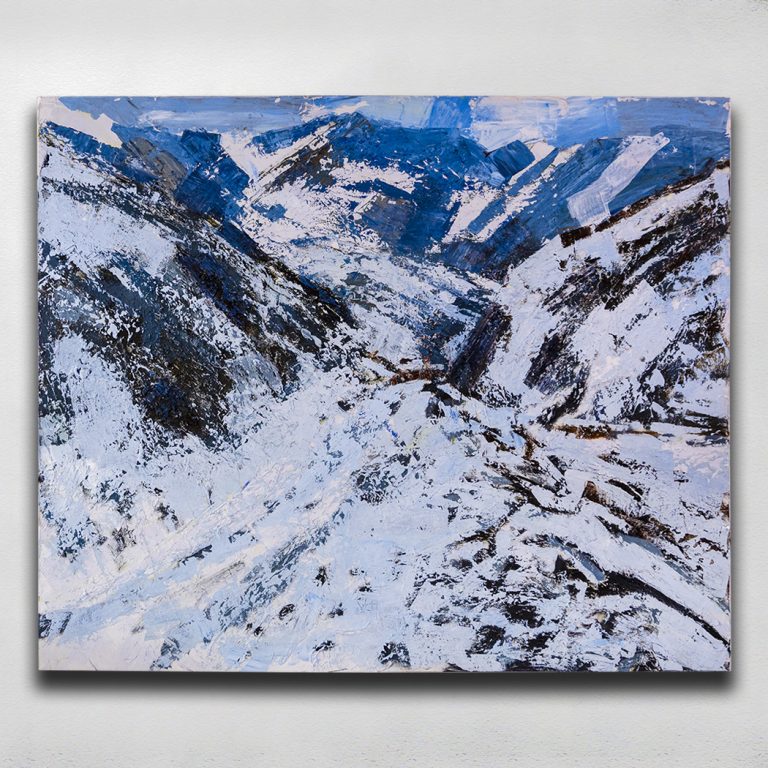
Mahdi Mohaddes | The Sorrow of the Mountain
In The Sorrow of the Mountain, sharp angles and passages of blue and white set up different rhythms. Follow the edges first, then pause over the areas that let your eye rest. Spend a moment with these two qualities before returning to the title. Does the word sorrow change what you notice in the mountain’s shape, or does it describe something about your own encounter with the picture? Here the mountain offers a first measure of our distance from nature.
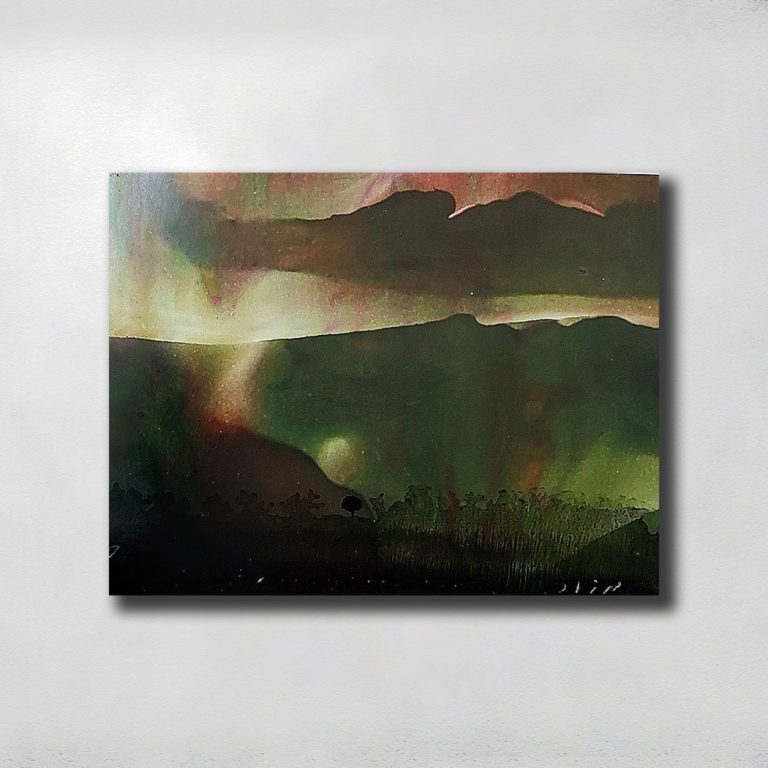
Mani Mehrzad | From A Garden Without Now
With this work from A Garden Without Now, the wide landscape gives way to a solitary tree. Keep the small physical dimensions of the work in mind as you view it on screen. Look at the relationship between the tree and the space left around it. That interval is part of how the image holds your attention. Beside the mountain, the tree poses another question about scale and detail: how can a reduction in detail make a single shape more present?
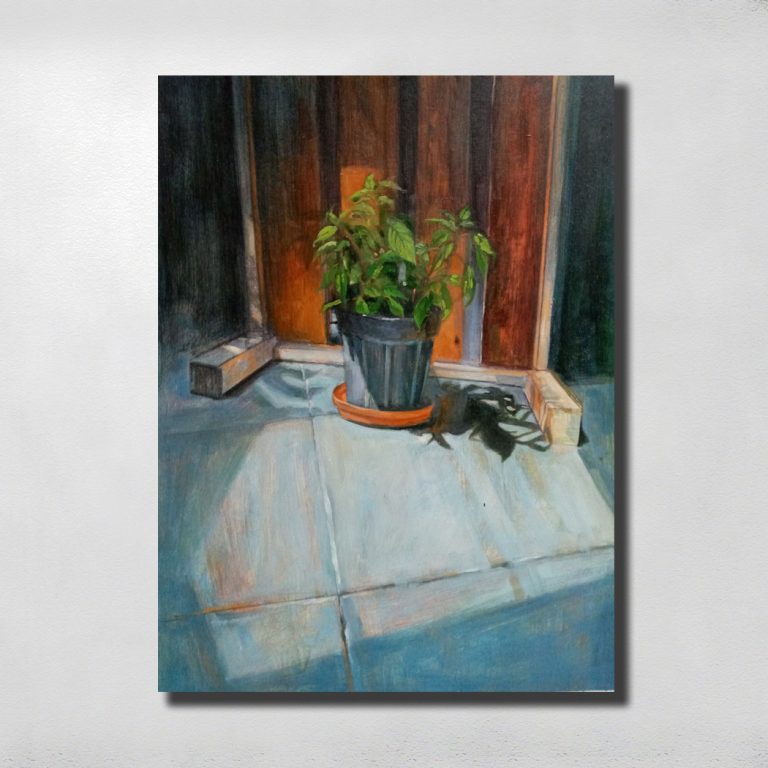
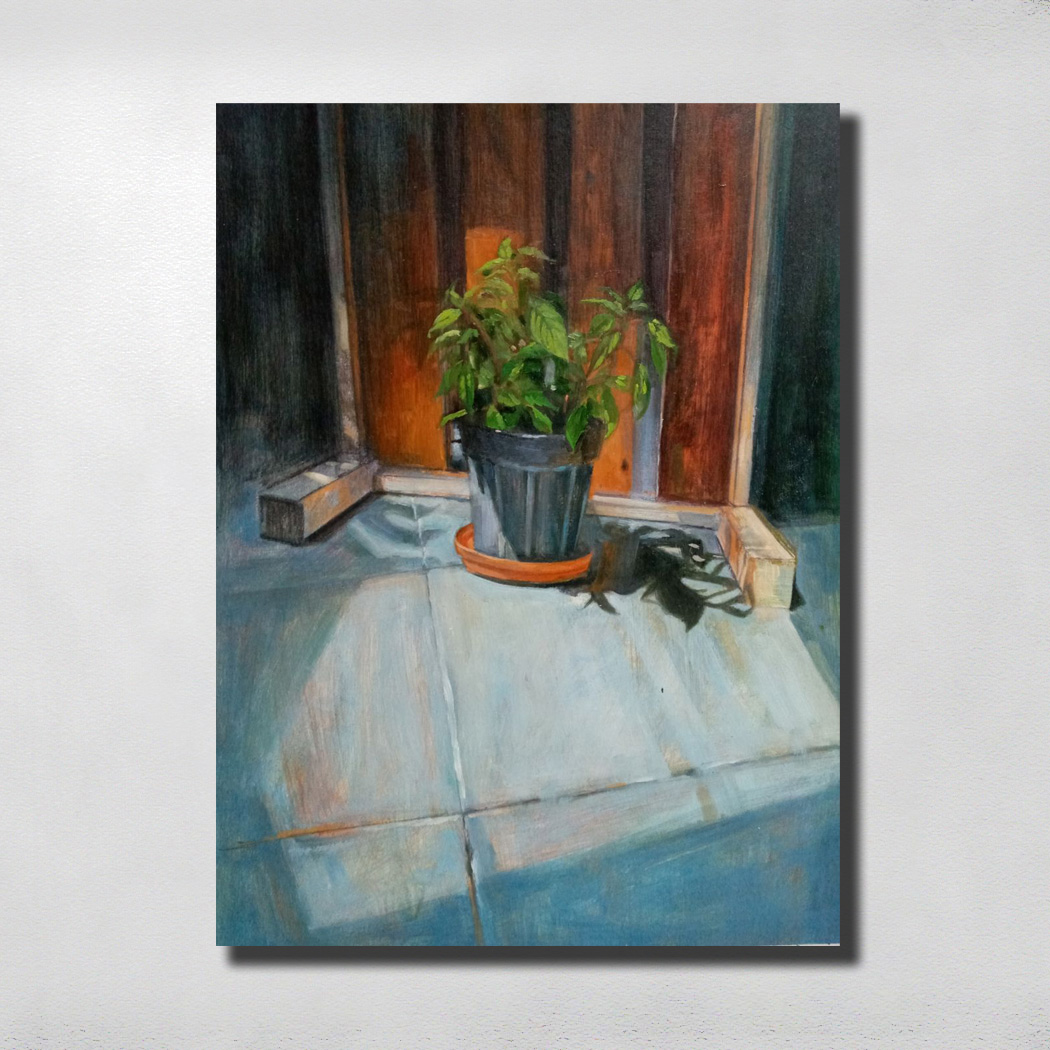
Nasreen Sadeghi Bejd | From The Green Presence
The small scale of the selected work from The Green Presence encourages another kind of close looking. Notice how green leads the eye and how it relates to the surrounding areas of colour. The title directs attention towards a quality of presence. In combination with Mehrzad’s work, this painting gives us two different encounters with plant life. Take time with both and compare where your eye settles, what draws it away, and how long each image holds you in one place.
Mahmoud Azadnia | Human of Nature
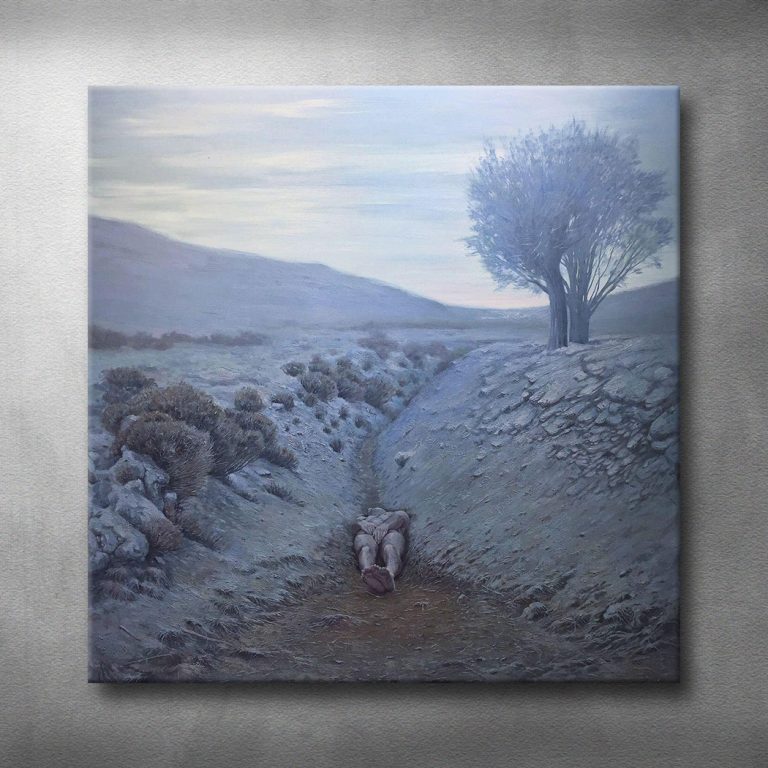
Human of Nature changes the scale of the encounter again. The human body is seen in relation to the ground and its furrows. Look at the contours of the body, the direction of the lines in the soil, and the ways those forms meet or diverge. The focus shifts from seeing a landscape to finding where the body belongs within it. Comparing this large canvas with the small work from A Garden Without Now can also make the difference between screen size and physical scale more apparent.
Rojano Mohammadzadeh | Reincarnation
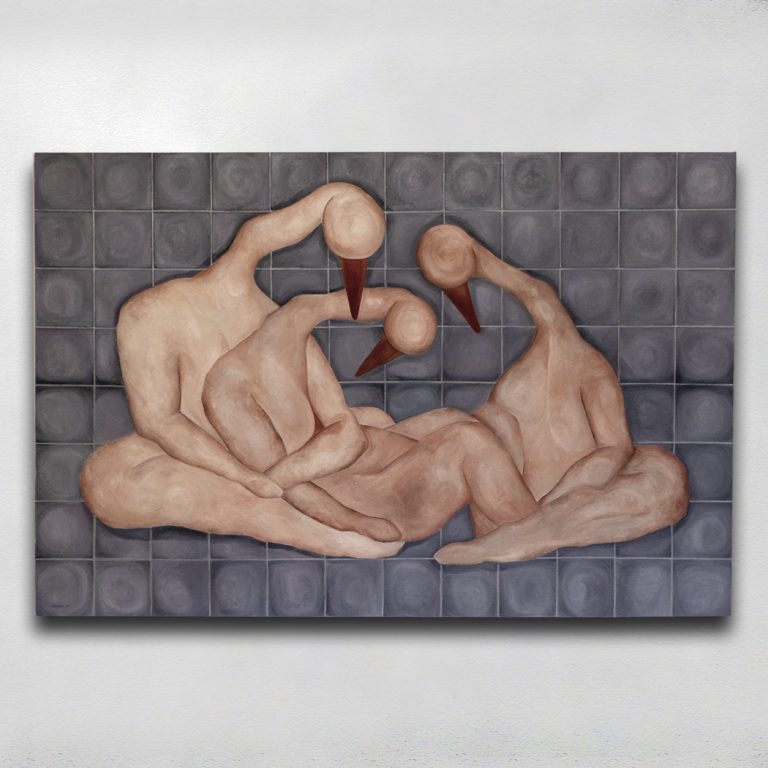
In Reincarnation, human and animal forms bring the route to a question about the boundaries of a figure. Begin with a feature that looks familiar, then follow the line until you find yourself reading it differently. At what point do you recognise a particular body? Where does the painting leave the form open to another reading? Returning from this work to Human of Nature puts two relationships side by side: the body in relation to its surroundings and the body in relation to other living beings.
How to visit the exhibition online
Start by scanning the artwork grid. Open each painting by selecting its image or name to see the image and the recorded artwork details. On returning to the exhibition, compare two works through one specific feature: their physical dimensions, the space surrounding a form, or the path colour makes for the eye. Ask which work changed how you looked at the other. A second visit can start from the figure and end at the tree or mountain. That return gives the exhibition a different rhythm and may bring forward a detail you missed the first time.